

The Compass That Could
a necklace that settled.
Nichole Hill is an incredible creator and storyteller. She hosts a podcast called “Our Ancestors Were Messy,” a show about “our ancestors and their drama.” Just this week, it won an Ambie award (the podcast version of the Emmys) for Best Indie and Best History Podcast. All the flowers, Nichole. All the damn flowers.
The show dives into gossip, scandals, tabloids, and pop culture that made headlines within the African American community during Jim Crow. It’s a rarely examined facet of African American society (good and ugly) centered on the realness of lives lived.
So when I asked her about jewelry, I knew she’d have a good story. She wanted to talk about a compass she had worn around her neck for almost eight years. “On the back, it said inch by inch.”
In her early twenties, Nichole joined AmeriCorps NCCC, a program she describes as a “domestic Peace Corps.”
“For two years, every two months, I moved to a different state, and I did a different service project.”
She loved being on the road with a team of people (usually ages 18 to 24), but there was some existential angst that accompanied the rootless adventure.
“…I had a manager at one point tell me that her grandmother had told her, ‘inch by inch, life's a cinch. Yard by yard, life is hard.’ And that was such a paradigm-shifting thing for me to hear at that age.”
She didn’t wear the compass during her time in AmeriCorps; she started wearing it after she got home to Washington, DC.
“I got a desk job and an apartment and a couch and things. And I was like, Is this what my life is going to be forever? Every single day, I'm just going to wake up and go to work and come home? And, you know, I'm kind of like freaking out and trying to project forward.” So that little saying popped back into her mind: inch by inch, life's a cinch, yard by yard, life is hard.
“So what I decided..I’m going to trust that I can take some chances in life and make some moves that maybe don't make a lot of sense to my other friends or my family.
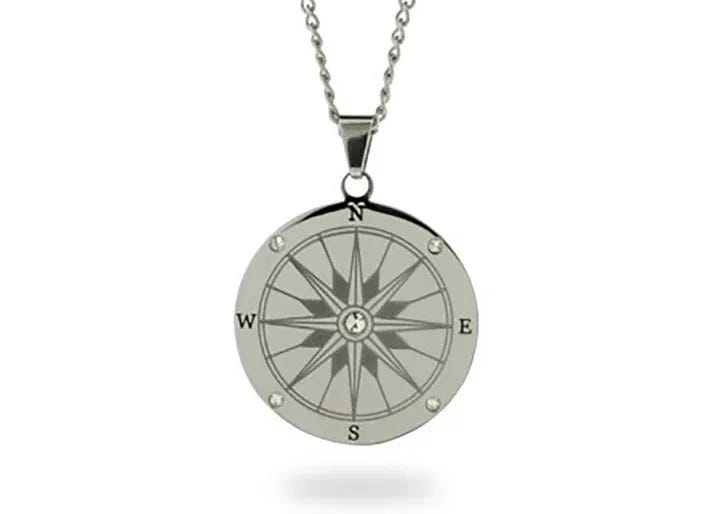
But as long as I'm grounded in who I am and as long as I'm going a little bit at a time.” The compass started to take on new meaning.
“I'm definitely a person who's taken a lot of risks, but I felt like the compass kept me grounded or just reminded me of why I was taking the risk, which was that I just wanted to live.”
But one day, she just took the compass off.
“I remember I was in New York…and I think it was by my early 30s.” She was exhausted by all of the moving around and decided that the first step to creating a normal life was clear: “I have to take this compass off.”But it wasn’t just as easy as unclasping the chain. “I'm also kind of a theatrical person, so I was like, ‘Now I need to get rid of it.’” That was nine years ago.
“I've been so many different versions of myself, and I do enjoy meeting all these different versions. I think when I was like, ‘a grown-up does this, no, a grown-up does that,’ the necklace was very much a part of that period of time. Probably not long after I got rid of the necklace, I read a book called Designing Your Life, which is all about how you can design the life you want. You don't just have to happen into it.”
So she’d design her life and move to Seattle. Or maybe she’d design herself a new existence in New Orleans? “But then, probably around the time I took the necklace off, I realized, ‘Oh, hey, you can just build the life you want, where you want. So I started getting really into storytelling and podcasting and audio…... Now, I realize that I believe I have a little more control than I thought I did then.”
She worked on a wide range of projects, but always had “Our Ancestors Were Messy” in the back of her head. “I really wanted to tell these stories about the past and the ways it still resonates today, both in its brilliance and bravery and courage and complications and also in the messiness and the humanity.”
And people really got it. People listened. Like a lot of people. To date, there have been over one million streams worldwide.
“It always feels like a miracle when somebody understands you, and so I just feel like a person who just had a miracle happen.”
Not that any of this has been easy. She has done the majority of this work on her own, and despite the show’s success, she is still bootstrapping the hell out of it. To fundraise for her next season, she received donations from 252 donors in 162 countries. In the back of my mind, I’m manifesting some Hollywood exec coming forward to turn one of her episodes into an amazing limited series.
As we were wrapping things up, a side question took me down a totally unrelated rabbit hole. It’s not just the people on the podcast who have interesting stories; turns out, Nichole’s family is from Auburn, Maine. Maine, the whitest state (93% of the population) in the nation.
“My nana and my grandpa [Emma and John Isaac Jackson] moved there when they were like 16, 17. For my nana, who was living in the deep south, people would marry off girls very young, especially to people who were heading north. So a preacher came to town and was like,’ I'm starting a church up in Maine.’ And so my Nana's mother was like, ‘You may have my daughter's hand in marriage.’
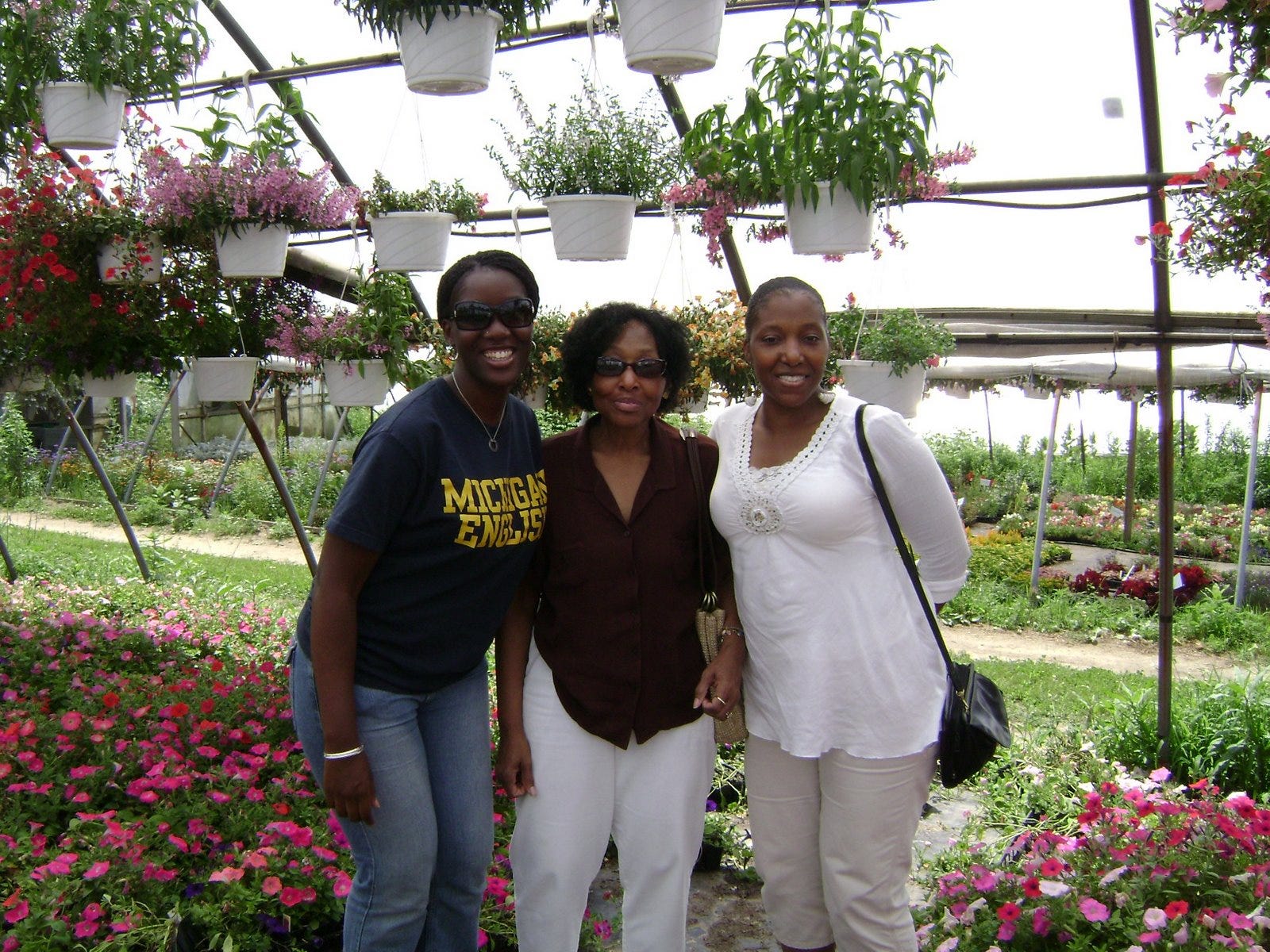
Emma was born in Atlanta in 1941 but lived in Maine for 53 years, from 1962 until her death in 2015.
When Emma was heading up to Maine, she was supposed to marry that preacher her mother had talked to. That changed when the car stopped in West Virginia to pick up another traveler. “And my Nana always says that when he got in the car, she only saw the back of his head. But still she knew he was her husband. My grandpa says he saw her hula hooping, and then he knew she was his wife. Men and women.”
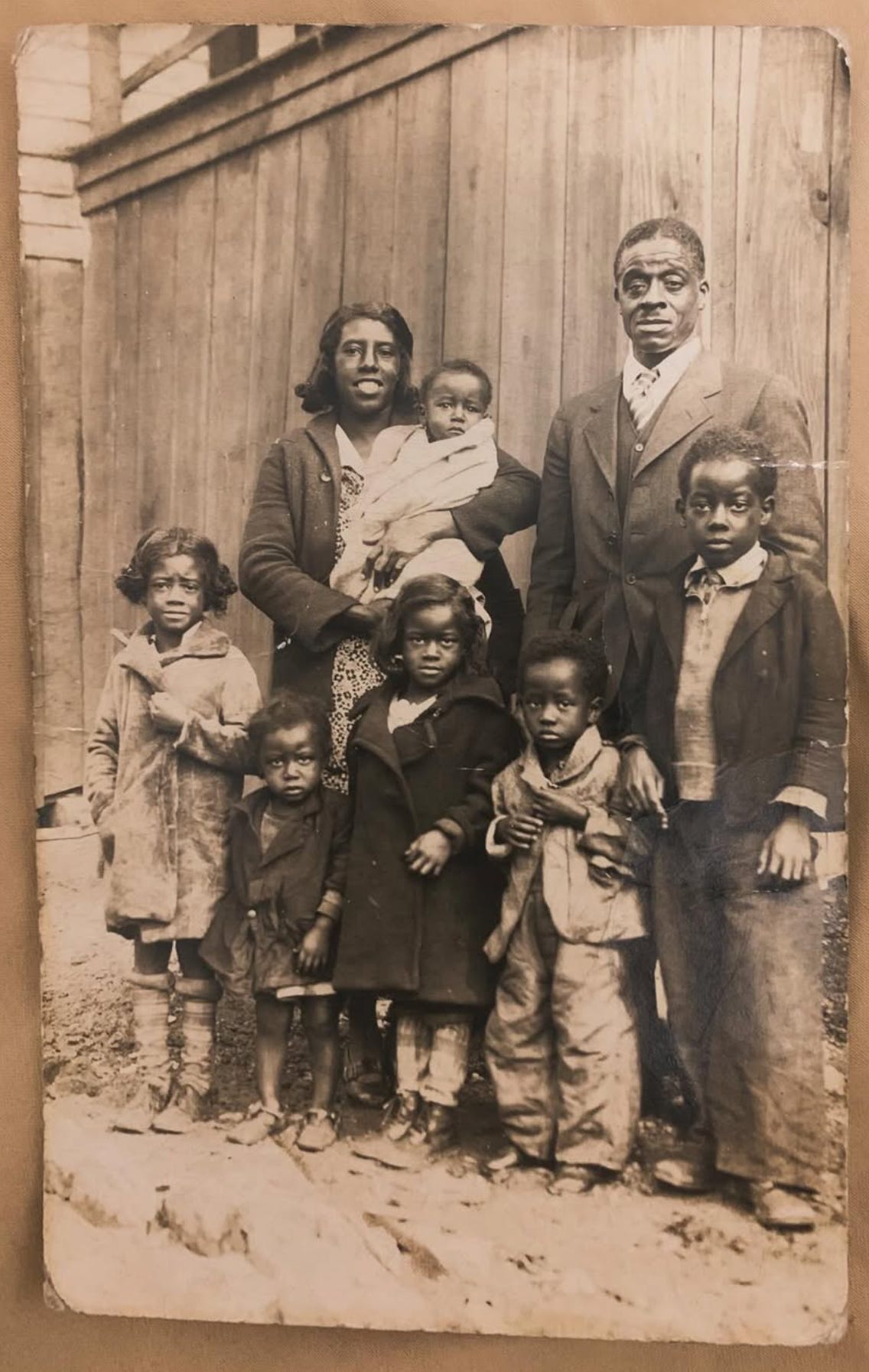
Shortly after they got to Maine, Emma and Isaac were married. “The preacher she was supposed to marry, I grew up knowing him as my uncle and his wife as my aunt.”
In a 2003 oral history conducted by the University of Southern Maine, Emma says her husband, Isaac, worked in eight to ten shoe factories during his lifetime. That is, when he wasn’t preaching at the Auburn church they founded. It wasn’t all easy, though. “You really couldn’t get a decent place. They would say that you could -- you would see a lot of listings and would know the houses were for rent. But the -- if they talked to you on the phone they would say that you could rent. But when you got there they’d -- there’d be another reason why you couldn’t rent it.” Despite these frustrations—or maybe because of them- Nichole says that the two became institutions in the community.
“In Portland, people would show up, and they would be like, ‘Oh, where are black people?’ There was a black porter who worked there [in Portland], and he would tell them [about] my grandpa's church. So I grew up in Maine with a bunch of people from the Deep South. So for me, Maine is a very black place because we had the church, my family, everybody attached to the church. And for me, honestly, I've spent all the summers up until 18, most Thanksgivings. It wasn't weird to be black there. But there are now a lot more black people.” [Note: Lewiston (Auburn’s twin city) has a large Somali population.]
While Nichole’s compass kept her grounded despite her wandering, Emma said she was content with where her wandering took her. Even if she never expected to stay in Maine. “It’s been a very good life.” As Nichole says, you don’t just “happen” into a life you love; you take hold of it and create it, “inch by inch.”
Listen to Nichole’s podcast here and follow her on Instagram for all the latest updates.
If you loved this Chainmail, you may also appreciate this interview I did with Tara Bynum, a scholar of pre-1800 African American literature. She studies happiness in an era of oppression.
Take care of your hearts.